


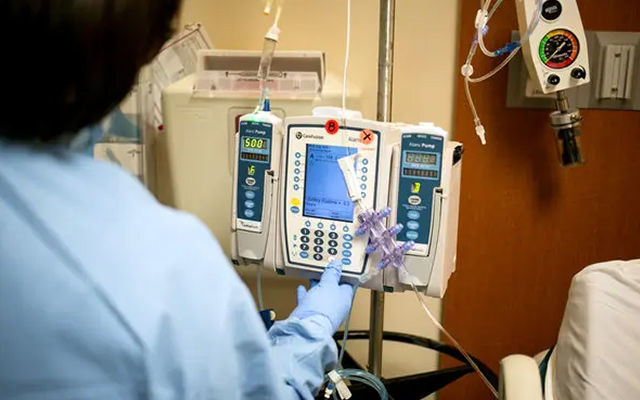
A cancer diagnosis once meant limited treatment paths and difficult choices. Today, science is rewriting that story.
Targeted therapy for cancer and immunotherapy cancer treatment are modern therapies that attack cancer cells with greater precision while strengthening the body’s natural defence system.
Understanding these advances becomes easier with guidance from Dr Joydeep Ghosh, a medical oncologist in Kolkata.
How cancer treatment has changed in recent years
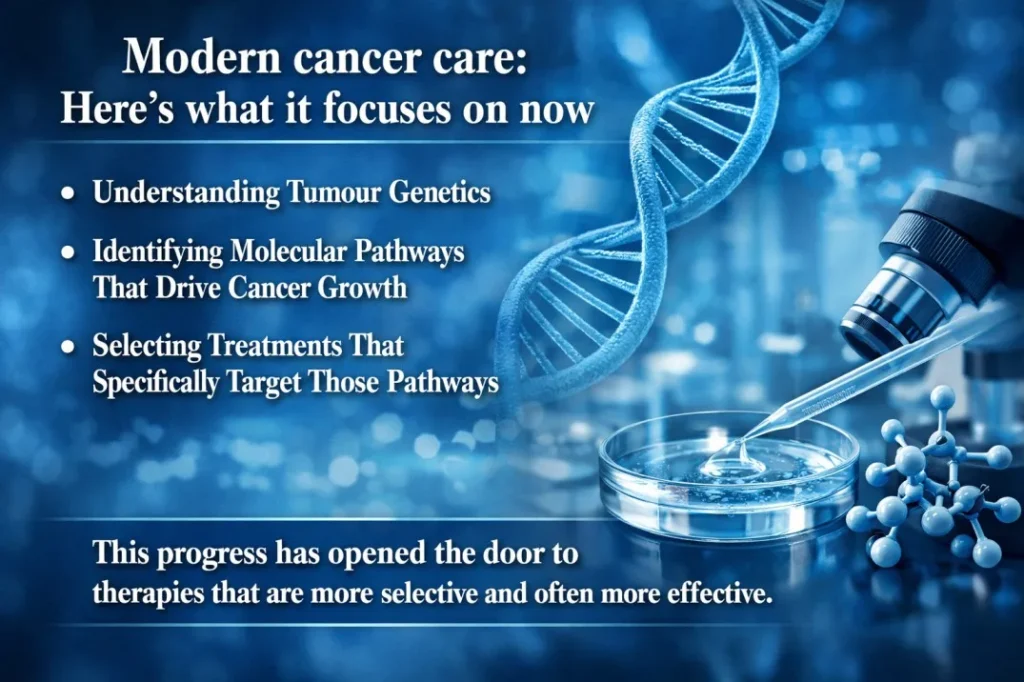
Modern oncology is moving from one-size-fits-all treatments toward personalised medicine. New therapies identify specific tumour characteristics and attack cancer more precisely, improving effectiveness while reducing damage to healthy cells.
Traditionally, treatment relied on surgery, radiation and chemotherapy. These remain essential, but research has shown that cancers of the same type can harbour different genetic mutations.
This discovery led to the concept of precision oncology treatment. This means therapy is selected based on the cancer’s biological behaviour rather than just its location in the body.
Understanding traditional cancer treatments: Why newer options became necessary
Traditional cancer treatments have saved millions of lives. However, they often affect both cancerous and healthy cells. This limitation is one reason scientists developed more precise therapies, such as targeted treatments and immunotherapy.
How chemotherapy works
Chemotherapy works by attacking rapidly dividing cells. Since cancer cells grow and divide quickly, chemotherapy drugs damage their ability to multiply.
However, some normal cells in the body also divide rapidly, including:
- Hair follicle cells
- Cells in the digestive tract
- Bone marrow cells
Due to this, chemotherapy may cause side effects such as hair loss, nausea or reduced immunity.
Limitations of conventional treatments
- Damage to healthy cells: Chemotherapy cannot always distinguish between healthy and cancerous fast-growing cells.
- Side effects: Patients may experience fatigue, infections, digestive issues or hair loss.
- Resistance development: Some cancer cells eventually adapt and become resistant to treatment.
What is targeted therapy in cancer treatment?
Targeted therapy focuses on specific molecules that help cancer cells grow and survive. By blocking these pathways, treatment can slow or stop tumour growth while reducing harm to normal tissues.
How targeted therapy identifies cancer-specific molecules
Cancer cells often carry abnormal genes or proteins that drive uncontrolled growth. Targeted therapy identifies these molecular signals and blocks them. For example, certain tumours contain abnormal receptors on their surface. Others have mutations inside their DNA that trigger continuous cell division.
Molecular targeted therapy drugs are designed to interfere with these signals. They may:
- Block growth factor receptors
- Interrupt cancer cell signalling pathways
- Prevent the formation of new blood vessels that feed tumours
By focusing on these mechanisms, treatment becomes far more specific.
Types of targeted therapy treatments
| Treatment Type | How It Works |
| Monoclonal antibodies | Bind to specific proteins on cancer cells |
| Small molecule inhibitors | Block internal signalling pathways |
| Hormone-targeted therapies | Prevent hormone-driven tumour growth |
Which cancers commonly use targeted therapy
- Breast cancer
- Lung cancer
- Colorectal cancer
- Blood cancers such as leukemia
What is immunotherapy, and how does it fight cancer?
Immunotherapy helps the body’s immune system recognise and destroy cancer cells. Instead of directly attacking the tumour, the treatment strengthens natural immune defences so they can identify and eliminate cancer.
How the immune system normally fights cancer
The immune system constantly monitors the body for abnormal cells. Special immune cells can recognise unusual proteins on tumour cells and attempt to destroy them.
This process is called immune surveillance [Source]. In many people, this natural defence removes potentially dangerous cells before they develop into noticeable cancers.
How cancer hides from immune cells
Cancer cells are clever survivors. Over time, they develop strategies to avoid immune detection. Some tumours produce proteins that deactivate immune cells. Others disguise themselves so the immune system fails to recognise them as threats.
How immunotherapy reactivates immune defence
Understanding how immunotherapy works in cancer has become one of the most exciting developments in modern oncology.
| Immunotherapy Type | Function |
|---|---|
| Checkpoint inhibitors | Reactivate immune cells by removing inhibitory signals |
| CAR-T therapy | Genetically modifies immune cells to attack cancer |
| Cancer vaccines | Stimulate immune response against tumour antigens |
One widely used strategy is checkpoint inhibitor immunotherapy, which blocks specific immune “brakes” that prevent T-cells from attacking cancer.
Targeted therapy vs immunotherapy: What is the difference?
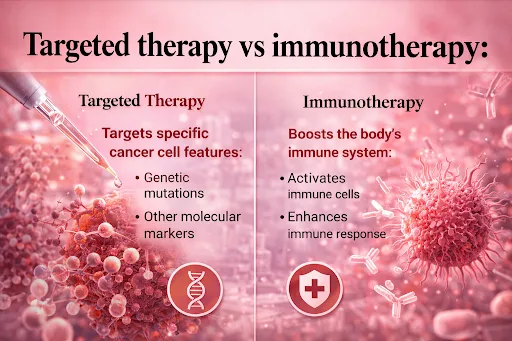
Another important distinction arises when discussing chemotherapy versus targeted therapy.
Chemotherapy broadly targets rapidly dividing cells, while targeted therapy focuses on specific cancer drivers. Both targeted and immune therapies may sometimes be used together, depending on tumour biology.
Check the table for a better idea.
| Feature | Targeted Therapy | Immunotherapy |
| How It Works | Targets cancer mutations | Boosts the immune system |
| Treatment Approach | Precision drug targeting | Immune activation |
| Cancer Suitability | Mutation-specific cancers | Immune-responsive cancers |
Who may benefit from these advanced cancer treatments?
Patients whose cancers show specific genetic mutations or immune markers may benefit most. Suitability depends on tumour type, stage, and molecular testing results, making personalised evaluation essential before treatment.
Role of genetic and molecular testing
Genetic and molecular testing identifies mutations and biomarkers within a tumour, helping doctors choose targeted therapy or immunotherapy more precisely. It enables doctors to select personalised cancer treatment options for each patient.
Cancer stage and type considerations
Treatment depends on how advanced the cancer is and its biology.
Most effective in:
- Advanced cancers
- Recurrent cancers
- Tumours with specific genetic mutations
Some cancers respond particularly well to immune-based therapy.
When these therapies are combined with chemotherapy or radiation
In some cases, targeted or immune therapies are combined with other treatments to improve results.
Examples include:
- Chemotherapy plus immunotherapy
- Targeted therapy after surgery
- Radiation combined with immune treatments
Such combinations can sometimes create powerful treatment strategies.
Benefits of targeted therapy and immunotherapy
The benefits of immunotherapy and targeted therapy in cancer continue to expand as research evolves.
- Improved precision in treatment
Modern therapies target specific biological pathways, improving treatment accuracy.
- Reduced damage to healthy cells
As the treatment targets cancer pathways, healthy tissues may be less affected than with traditional chemotherapy.
- Potential for longer disease control
Some patients experience long-lasting responses, particularly with immune therapies.
- Improved quality of life for many patients
Many individuals receiving these treatments continue daily activities with fewer severe side effects.
These advances are particularly encouraging for patients seeking cancer treatment without chemotherapy when appropriate.
Possible side effects patients should know
Targeted therapy side effects
- Skin reactions or rashes
- Changes in blood pressure
- Fatigue
Immunotherapy side effects
- Inflammation in organs such as the lungs or liver
- Hormonal changes
- Immune-related fatigue
Challenges and limitations of modern cancer therapies
- Not suitable for all cancer types
These therapies work best when a tumour carries specific genetic mutations or immune markers. Without these biological targets, the treatment may not provide meaningful benefit.
- Cost and accessibility concerns
Some advanced cancer therapies remain expensive and may not be available at all treatment centres, affecting timely access for some patients.
- Treatment resistance possibility
In some cases, cancer cells may gradually adapt and develop resistance to therapy. Ongoing research is focused on improving drug design and combination treatments to overcome this challenge.
The future of cancer treatment: Where research is heading
- Combination therapies
Combining immunotherapy, targeted therapy and conventional treatments may improve outcomes.
- Personalised gene-based treatment
Advanced tumour sequencing may help doctors select treatments with remarkable precision.
- Expanding immunotherapy applications
Researchers are studying immune-based therapy for more cancer types than ever before.
When should cancer patients ask about targeted therapy or immunotherapy?
- After a cancer diagnosis: Early tumour profiling may reveal treatment targets.
- During recurrence or advanced cancer: If cancer returns or spreads, modern therapies may offer additional options.
- When conventional treatment response is limited: Patients who do not respond well to standard therapy may benefit from newer approaches.
People Also Ask
Is immunotherapy safer than chemotherapy?
Immunotherapy works differently and may cause fewer traditional side effects, such as hair loss. However, it can trigger immune reactions that require careful monitoring.
Does targeted therapy cure cancer?
Targeted therapy can control cancer for long periods, but does not cure every cancer. Its success depends on tumour biology.
Are these therapies used in early-stage cancer?
In some cases, they are used after surgery or combined with other treatments.
How long do immunotherapy treatments last?
Treatment duration varies from months to longer periods, depending on response.
Can targeted therapy and immunotherapy be used together?
Yes. In certain cancers, doctors combine these treatments to improve effectiveness.
Do these treatments cause hair loss?
Hair loss is less common with targeted therapy or immunotherapy compared with chemotherapy.
Don’t Delay. Act Now
Patients facing cancer often benefit from discussing advanced treatment options with a medical oncologist in Kolkata, such as Dr Joydeep Ghosh, who can evaluate tumour biology and guide personalised treatment decisions.
Schedule an appointment today.